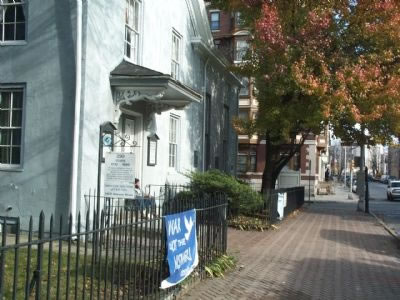
British Light Dragoons
This meeting house was occupied by the British Light Dragoons December 1776.

Explore Trenton, Princeton, Lawrence, Hopewell, Ewing, and Washington Crossing history — from Revolutionary War turning points and colonial houses to churches, museums, parks, and civic landmarks.
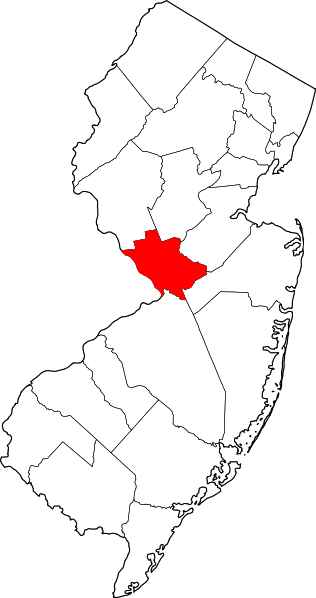
Mercer County is named for Continental Army General Hugh Mercer, who died after the Battle of Princeton in 1777. Founded on February 22, 1838 from portions of surrounding counties, Mercer County includes some of New Jersey’s most significant Revolutionary War, colonial, state-government, religious, transportation, and cultural landmarks.
Washington’s crossing, the Battles of Trenton and Princeton, the Old Barracks, Princeton University landmarks, Morven, the William Trent House, Cadwalader Park, Lawrenceville village history, and the State House district all help define Mercer County’s role in New Jersey and American history.
Washington Crossing, Trenton, Assunpink Creek, and Princeton form one of the most important Revolutionary War corridors in the state.
Trenton’s churches, civic buildings, barracks, taverns, courthouse, Roebling sites, and state landmarks tell a layered city story.
Nassau Hall, Princeton Battlefield, Morven, Quaker Meeting House, Joseph Henry House, and related sites connect Mercer County to national history.
Historic houses, museums, churches, and community markers across Mercer County preserve smaller stories that make the region memorable.
This meeting house was occupied by the British Light Dragoons December 1776.
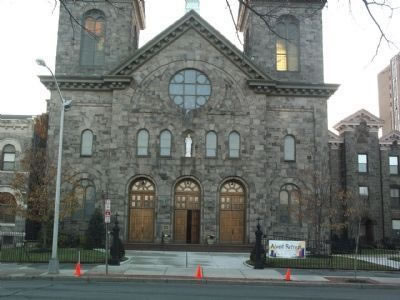
New Jersey’s oldest Catholic parish. Successor of St. John’s 1814.
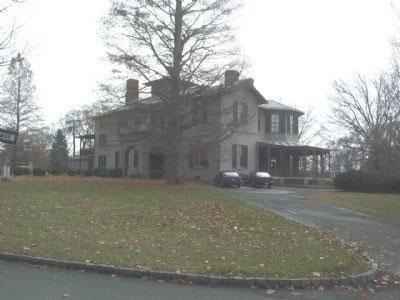
Fine example of Italianate villa designed by John Notman about 1846 for Henry McCall, Paper Manufacturer. In February 1881, Henry McCall Jr. sold Ellarslie to George Farlee for $25,000. Seven years later, in September of 1888, the city of Trenton acquired the property from Farlee for $50,000, which also included the surrounding 80 acres, which would become the city's first public park, Cadwalader Park, designed by the father of landscape architecture, Frederick Law Olmsted.
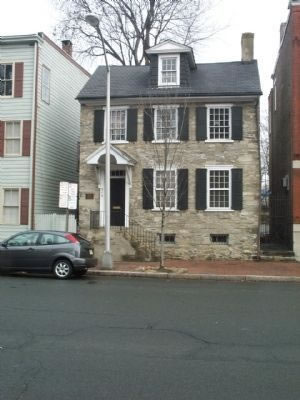
Built 1796 Occupied by the Emlen Family for ninety years. “The Old Stone Tea House” in the nineteen-twenties.
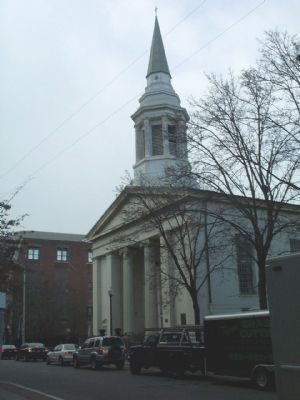
Presbyterian Church formed in 1712. Built in 1726 and rebuilt in 1805.
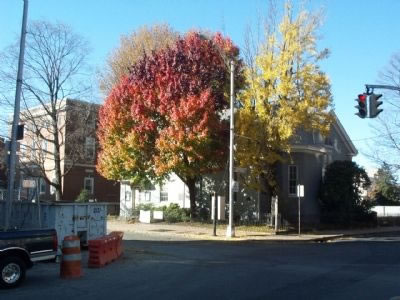
Established 1684 by Mahlon Stacy & others as part of Chesterfield Monthly Meeting. Building erected in 1739.
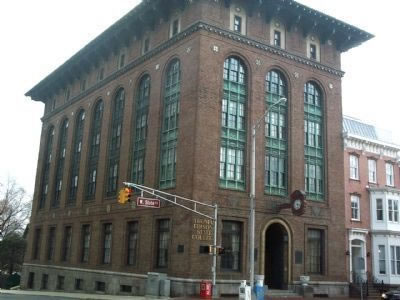
This building was erected in 1910 by Henry Cooper Kelsey as a tribute to the memory of his wife Prudence Townsend Kelsey and for the use of the students of arts and crafts of the City of Trenton.
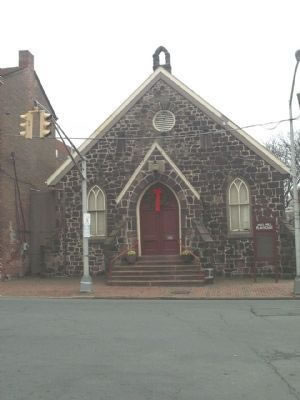
The Mill Hill Playhouse is housed in an old church built in 1873 by the Messiah Church. The building was sold by them in 1902 to the Lutheran Church of the Saviour which merged with other congregations in 1967. The empty church was gutted by fire in 1977 and converted to a theatre by the City of Trenton. The Passage Theatre Company currently uses this facility.
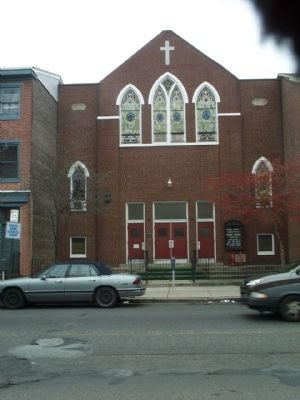
The Oldest Black Church in Trenton Incorporated by slaves and freedmen 1811. Original edifice this site 1819. Member Founding Conference African Methodism.
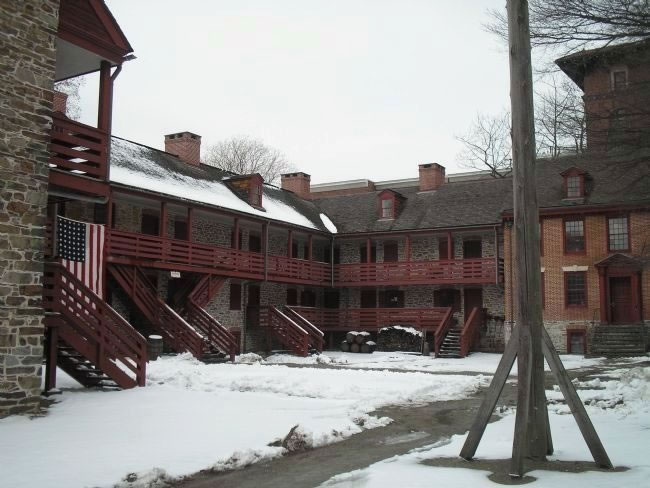
Built in 1758 for British troops of the French and Indian War. Hessians were quartered here before the Battle of Trenton. Col. Johann Rall and his Hessian troops were quartered here when George Washington and the Continental army attacked on December 26, 1776.
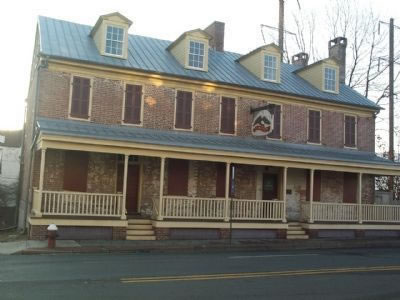
During the 19th century this tavern served travelers, soldiers, and Trentonians as a social and political center.
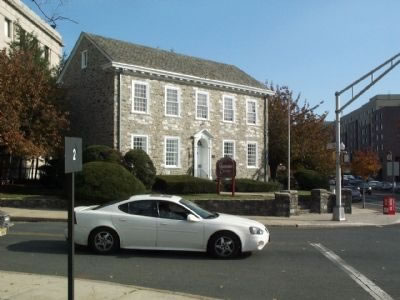
Erected 1793 by Trenton Lodge No. 5 F. & A. M. Restored and Rededicated 1916.
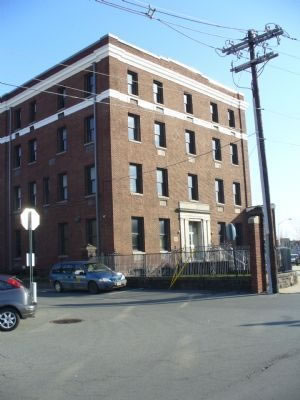
Residence, built in 1855, of John A. Roebling. American developer of wire rope and the suspension bridge. Occupied by his family until after his death in 1869. Thereafter company offices until acquired by the county. Basement vaults contained company drawings and records.
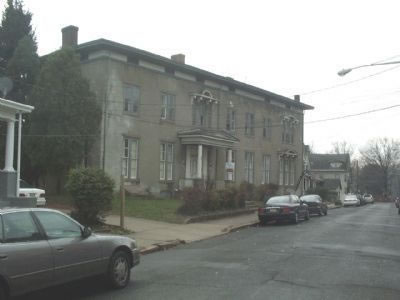
Built in 1784 by General Philemon Dickinson of General Washington’s Continental Army. Original part of building (removed 1905) was used as Hessian outpost in 1776.
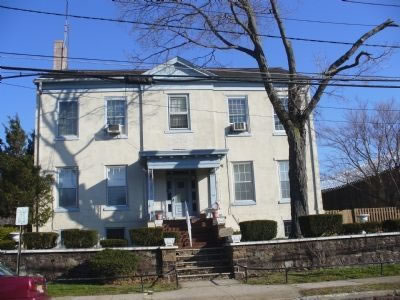
Original state prison erected in 1797.
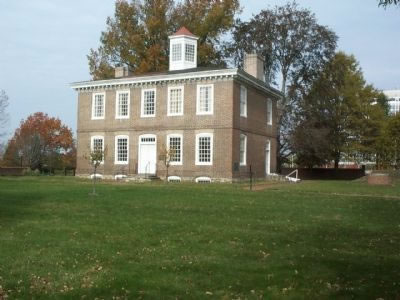
This house was built in 1719 by William Trent for whom Trenton was named. Given to the City of Trenton in 1929 by Edward Ansley Stokes.
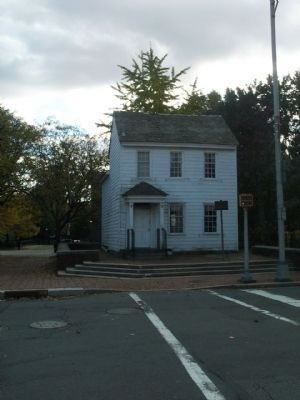
Circa 1766, Home of Alexander Douglass, Quartermaster in Washington’s Army, who fought in the Battle of Assunpink, Jan. 2, 1777. Here on that date General Washington held the Council of War. Washington’s idea was to leave campfires burning on the south bank of the Assunpink allowing his men to move out toward Princeton under the cover of darkness, leaving the enemy on the opposite bank unaware. Many military historians deem this the boldest plot in American military history. The successful battles of Trenton are said to be the turning point of the Revolution. The Douglass House has been moved several times having been built at the site of the Lutheran Church on South Broad Street.
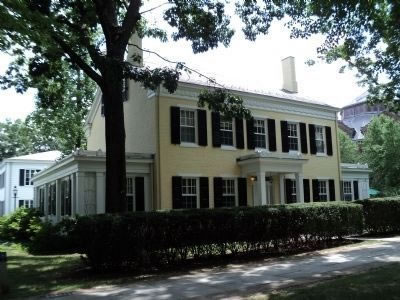
This house is named for Joseph Henry, the first Director of the Smithsonian Institution and a leading American scientist whose scientific contributions were in the field of electromagnetism. He was also a professor at Princeton University from 1832 to 1846.
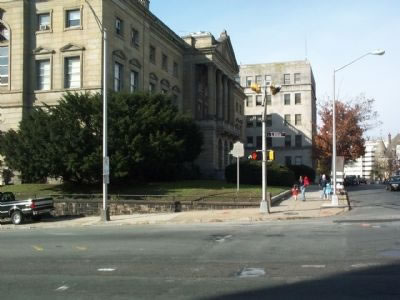
Built on Mill Hill. 1839. Named for General Hugh Mercer who fought at Trenton and died in the Battle of Princeton, 1777. Goodyear vs. Day patent case tried here in 1852. Daniel Webster won for Goodyear. The result was a great impetus to local rubber industry.
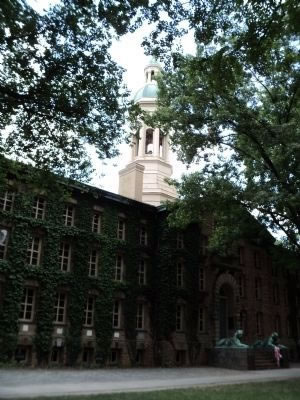
This building, erected in 1756 by the College of New Jersey and named Nassau Hall in honor of King William III, was seized by British forces for military purposes in 1776, and retaken by the American Army January 3, 1777. Here met from June 30, 1783 until Nov. 4, 1788, the Continental Congress, and here Aug. 26, 1783, General Washington received the grateful acknowledgements of the Congress for his services in establishing the freedom and independence of the United States of America.
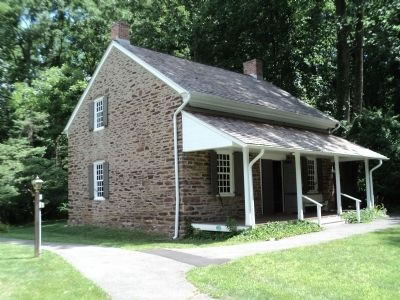
This house was used as a hospital during the January 3, 1777 Battle of Princeton. Richard Stockton, a signer of the Declaration of Independence, is buried on the grounds.
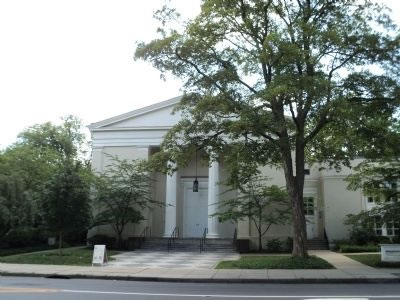
On this site in the year 1766 was erected The First Presbyterian Church of Princeton. During the Revolutionary War it was occupied, first by British soldiers and afterwards by The Colonial Forces.
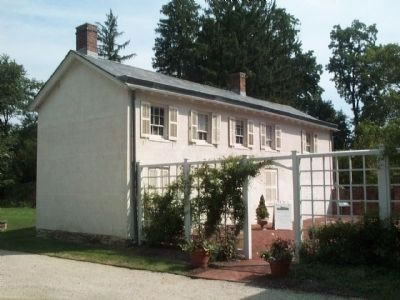
Behind the Morven Museum is an ice-house, which probably dates to the 18th century. Ice was harvested from the pond on the Morven property. In the mid-19th century, Commodore Robert F. Stockton enlarged the structure for use as a wash house or laundry, and a dormitory for servants.
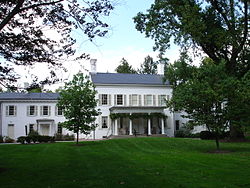
The wing housing the kitchen and service quarters is the oldest part of Morven, built by Richard Stockton, Signer of the Declaration of Independence, and his wife, Annis, in the mid-18th century. It was raised in height in the mid-19th century. The porch at its rear would have been used as a work place in good weather, as would the service yard. While one or two servants may have slept in the upper story, it probably also housed children of the large Stockton families.
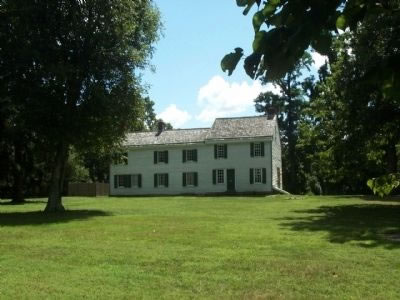
In 1772, Thomas Clarke, a Quaker farmer purchased 200 acres of land from his brother William. The land, then part of West Windsor, had been in the Clarke family since 1696. Thomas replaced an existing structure with the main house that stands today. He lived here with at least two of his sisters, Hannah and Sarah, until his death in 1802. Sarah inherited and remained in the house until her death in 1840. Her nephew, John H. Clarke, enlarged the east wing which included a new kitchen. The house was sold in 1863 to Henry E. Hale and again in 1944 to Blackwell Smith. The State of New Jersey purchased the property in 1946, and established the Clarke House Museum in 1976.
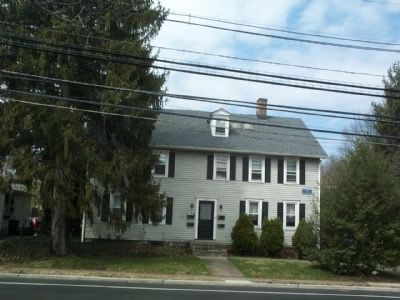
2695 Lawrenceville Road Lawrence Township, 08648 The first reference to this house as a tavern was in May 1789, when William Compton petitioned for a tavern license. He wrote that he had recently purchased a house in Maidenhead opposite the Presbyterian Church and, being encouraged by his neighbors and friends to keep a house of entertainment, solicited a license for the ensuing year. In 1804, John Moore applied for his first license at this location. This tavern was used for many years as a place to hold the annual township meetings. In 1816, a meeting was held here to petition for the township’s name change from Maidenhead to Lawrence. Dr. Gosman, a minister of the Lawrenceville Presbyterian Church, is said to have spoken of visits to the tavern by some of his congregants as “the thirst after righteousness.” In the 1890’s, Ed Conover kept his stage coach in a barn behind the tavern
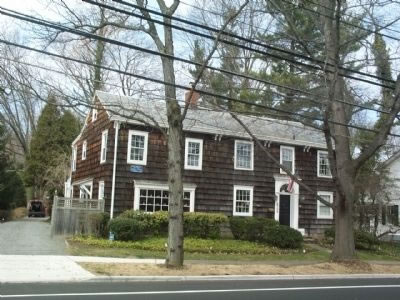
Joseph Scudder House c. 1779. First town hall of Lawrence, NJ from 1931 - 1944.
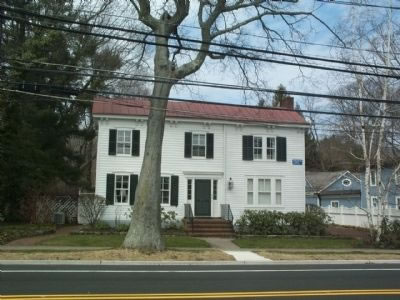
Home of the wheelwright and site of the wheelwright shop. Harvey Brearley’s store 1837.
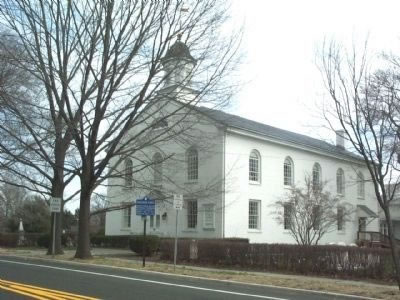
Organized during 1698, this Presbyterian congregation was among the earliest in America. Part of this church was built in 1764.
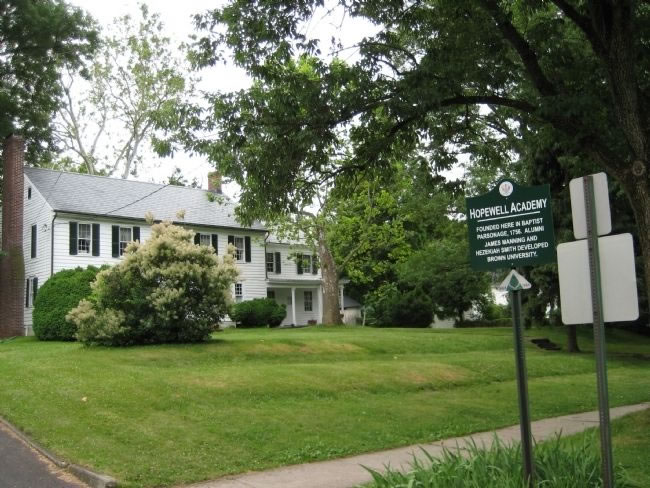
Founded here in Baptist Parsonage, 1756. Alumni James Manning and Hezekiah Smith developed Brown University.
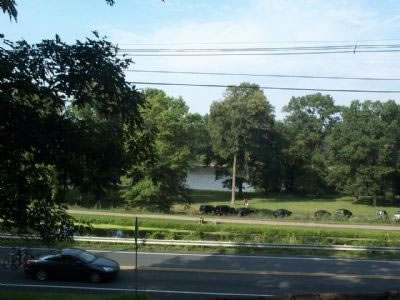
View of the Delaware River at the site where Washington crossed from Pennsylvania to New Jersey, Christmas Night, 1776, with 2400 men, artillery and supplies. The troops marched nine miles to attack the Hessians stationed at Trenton. The “Battle of Trenton”, December 26, 1776, resulted in a major victory for Washington’s army.
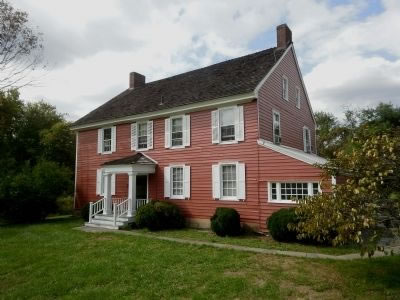
Temple-Ryan Farmhouse c. 1750